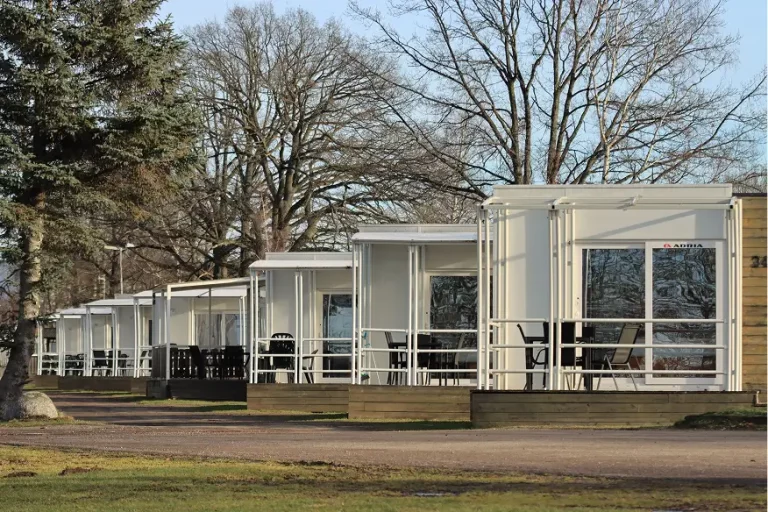
The tax treatment of holiday lets changed on 6 April 2025, when the Furnished Holiday Lettings (FHL) regime was abolished. Properties that previously qualified for the FHL rules lost a number of tax advantages, bringing their treatment more closely in line with other residential property businesses.
For holiday let owners, the change has understandably raised questions about what tax relief is still available. One area that should not be overlooked is holiday lets capital allowances.
Although the old FHL rules have gone, that does not mean every piece of expenditure associated with a holiday property has simply become irrelevant for tax purposes. The treatment of capital expenditure depends on the property, how it is used and the nature of the costs involved.
Understanding the difference between the reliefs that disappeared and those that may still be available is an important part of managing the tax position of a holiday let.
What Was the FHL Tax Regime?
The Furnished Holiday Lettings regime gave qualifying holiday accommodation a number of tax advantages that were not generally available to standard residential landlords.
Among other things, qualifying FHL businesses could claim capital allowances on certain fixtures and equipment. There were also differences in the way finance costs and losses were treated.
To qualify, properties had to satisfy specific conditions covering matters such as availability and occupancy. The purpose was to ensure that the regime applied to genuine holiday accommodation rather than properties being used primarily as private homes or ordinary long-term lets.
The government abolished the FHL regime from 6 April 2025. As a result, holiday let owners can no longer rely on the specific tax treatment that applied under the old rules.
What Changed After the FHL Regime Was Abolished?
The removal of the FHL regime means holiday lets are now subject to the general property business rules rather than receiving the separate treatment previously available.
This affected several areas of taxation. The special capital allowance rules associated with qualifying FHL businesses were removed, while changes were also made to the treatment of finance costs and losses.
That does not mean, however, that every tax consideration relating to expenditure on a holiday property has disappeared.
The important question is now what type of expenditure has been incurred and which tax rules apply to it. Simply labelling a property as a holiday let is no longer enough to determine whether a particular cost qualifies for relief.
For property owners with substantial expenditure on fixtures, installations or improvements, a professional review can help establish what opportunities remain.
What Are Holiday Lets Capital Allowances?
Capital allowances are a form of tax relief available on certain qualifying capital expenditure. They can be particularly relevant when dealing with commercial properties and the fixtures contained within them.
A building is made up of far more than its walls, floors and roof. It can contain electrical systems, heating installations, lighting, plumbing and other equipment that may have a different tax treatment from the building itself.
For holiday let owners, this distinction can be important.
The abolition of the FHL tax regime means owners need to consider the current rules carefully rather than assuming the previous FHL treatment still applies. Equally, they should not assume that the end of FHL means there is nothing left to investigate.
The availability of relief will depend on the individual circumstances, including the property’s use, the expenditure involved and how the property is held.
What Expenditure Could Be Relevant?
Holiday accommodation can involve considerable expenditure beyond the cost of purchasing the property itself.
Depending on the circumstances, a property may contain qualifying fixtures and systems such as:
- Electrical installations
- Heating and hot water systems
- Air conditioning
- Lighting
- Plumbing and sanitary installations
- Kitchen installations
- Fire and security systems
- Certain integral features
- Specialist electrical equipment
Refurbishments, conversions and substantial improvements can also involve a mixture of different types of expenditure, each of which may need to be considered separately.
This is why simply looking at the overall cost of a property or renovation project is rarely enough. A detailed assessment can help separate the different elements of the expenditure and determine how they should be treated for tax purposes.
Buying a Holiday Let? Consider the Fixtures Before You Complete
Capital allowances should be considered as part of the due diligence process when purchasing property.
Fixtures within a building can represent a sizeable amount of expenditure, but they are easy to overlook when the transaction is viewed simply as the purchase of a house, apartment or other holiday accommodation.
There can also be specific rules around fixtures where a previous owner has already claimed capital allowances. These rules can affect what a new owner is able to claim, making it sensible to address the issue during the acquisition process rather than several years afterwards.
Relevant records, agreements and supporting documentation should be retained wherever possible. Getting the position right at the point of purchase can prevent problems later.
Why Use a Capital Allowances Specialist?
Capital allowances are a technical area of property taxation. Working out whether expenditure qualifies, and how much can be claimed, is not always straightforward.
An accountant may deal with the wider tax position of a holiday let, but a specialist capital allowance surveyor can take a more detailed look at the property itself and the fixtures within it.
This can involve reviewing invoices, construction costs, property plans and refurbishment records, alongside an inspection of the building.
That level of investigation can be particularly useful where a property has undergone a major renovation or conversion, as costs can be spread across numerous parts of the project.
Think About Tax Before Starting Major Work
Tax planning is most useful when it happens before money is spent.
If you are planning a refurbishment, conversion or major improvement to a holiday property, keeping detailed records from the beginning can make it much easier to establish exactly what has been purchased and how the expenditure should be treated.
It is also worth remembering that a single project can contain several different categories of expenditure. Some costs may qualify for one form of relief, while others may not.
Rather than making assumptions based on the overall project, property owners should look at the individual costs and obtain advice where the position is unclear.
The End of the FHL Tax Regime Does Not End the Conversation
The abolition of the FHL tax regime was a major change for holiday let owners, particularly those who had previously benefited from the preferential treatment available under the scheme.
But the change should not lead property owners to write off the possibility of tax relief altogether.
For anyone who has bought a holiday property, carried out a substantial refurbishment or invested heavily in fixtures and installations, it may be worth taking a fresh look at the expenditure involved.
The tax treatment of holiday lets is now different, but there may still be opportunities that deserve closer examination.
Conclusion
The abolition of the FHL tax regime from April 2025 changed the way holiday let properties are treated for tax purposes. The specialist reliefs available under the old regime have gone, and owners now need to consider the general rules that apply to their property business.
That makes understanding holiday lets capital allowances more important, not less. The availability of relief will depend on the property and the nature of the expenditure, so there is no single answer that applies to every holiday let.
If you have recently purchased a holiday property, undertaken a major refurbishment or invested significantly in fixtures and installations, a specialist review could help establish whether there are tax relief opportunities worth pursuing.
Eureka Capital Allowances can assess the expenditure within your property and identify potential capital allowance opportunities that may otherwise be missed. Contact the team to discuss your holiday let and find out whether a specialist capital allowances review could benefit you.